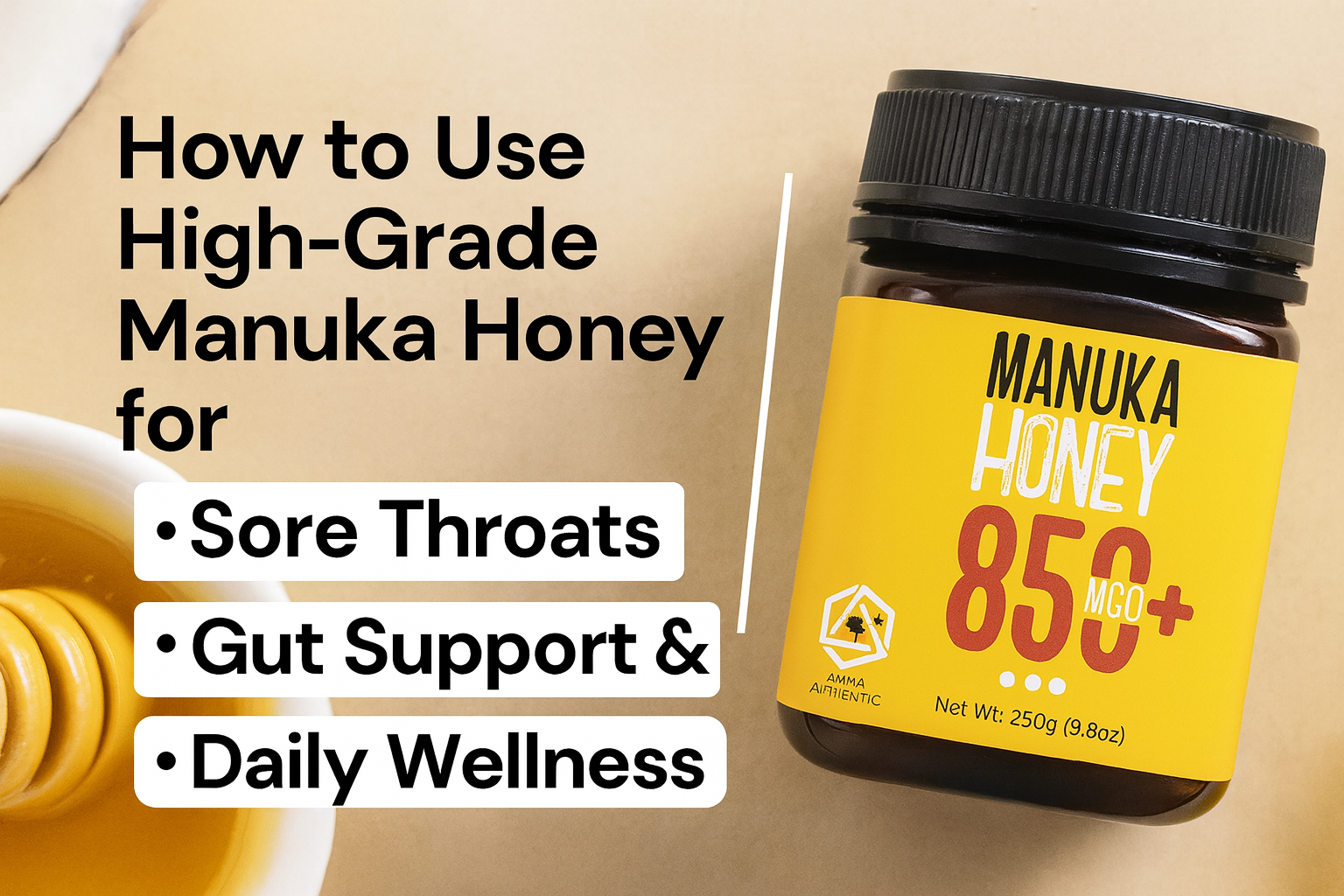

1. Definition: Potency and Authenticity
“High-grade” Manuka honey refers to honey that demonstrates verified antibacterial potency, authentic botanical origin, and quality assurance through standardized testing.
It is not a marketing adjective alone; in regulated contexts it denotes measurable levels of key bioactive compounds and compliance with certification frameworks.
2. Core Chemical Marker: Methylglyoxal (MGO)
The primary determinant of grade is the concentration of methylglyoxal (MGO).
Higher MGO values correspond to stronger non-peroxide antibacterial activity.
Typical commercial ranges:
- MGO 100–250: entry to mid-range
- MGO 300–550: therapeutic-grade
- MGO 800+: very high potency
Interpretation: “High-grade” generally begins at MGO ≥300 or equivalent ratings, depending on the certification system.
3. UMF Rating System
The most widely recognized grading framework is the Unique Manuka Factor (UMF) system administered by the Unique Manuka Factor Honey Association.
UMF integrates several markers:
- MGO concentration
- Dihydroxyacetone (DHA)
- Leptosperin (botanical authenticity marker)
Approximate equivalence:
- UMF 5+ → lower grade
- UMF 10+ → moderate activity
- UMF 15+ → high grade
- UMF 20+ and above → premium therapeutic grade
Interpretation: In most retail and clinical contexts, UMF 15+ or higher qualifies as high-grade.
4. Authenticity and Geographic Origin
Authentic Manuka honey is derived from nectar of Leptospermum scoparium, primarily produced in New Zealand and Australia.
High-grade classification requires:
- Verified monofloral origin
- Chemical fingerprint testing
- Traceable supply chain
Interpretation: High potency without verified origin does not meet high-grade criteria.
5. Purity and Processing Standards
High-grade Manuka honey is expected to be:
- Raw or minimally processed
- Free from dilution with other honeys
- Tested for contaminants (antibiotics, heavy metals)
- Stored and packed to preserve MGO and enzymatic activity
Heat treatment or excessive filtration can reduce active compound levels, undermining grade integrity.
6. Shelf-Life Considerations
High-grade status is time-dependent.
- MGO and enzymatic activity decline gradually.
- Labels reflect tested values at packaging, not indefinitely.
Implication: A product may be labeled high-grade but fall below that threshold late in its shelf life if stored poorly or for extended periods.
Practical Indicators of High-Grade Manuka Honey
Evaluate using objective criteria:
- UMF ≥15+ or MGO ≥300
- Third-party certification seal
- Batch testing and traceability
- Recent packing date
- Opaque, sealed packaging
Summary
“High-grade” Manuka honey denotes verified potency, authentic floral origin, and adherence to recognized grading systems such as UMF or MGO concentration. It reflects measurable antibacterial strength and quality control rather than branding alone. The designation is meaningful only when supported by laboratory testing, certification, and proper handling throughout the supply chain.